
Ceramics
The Difference Between Earthenware, Stoneware, and Porcelain: A Potter's Explainer
October 08, 2026
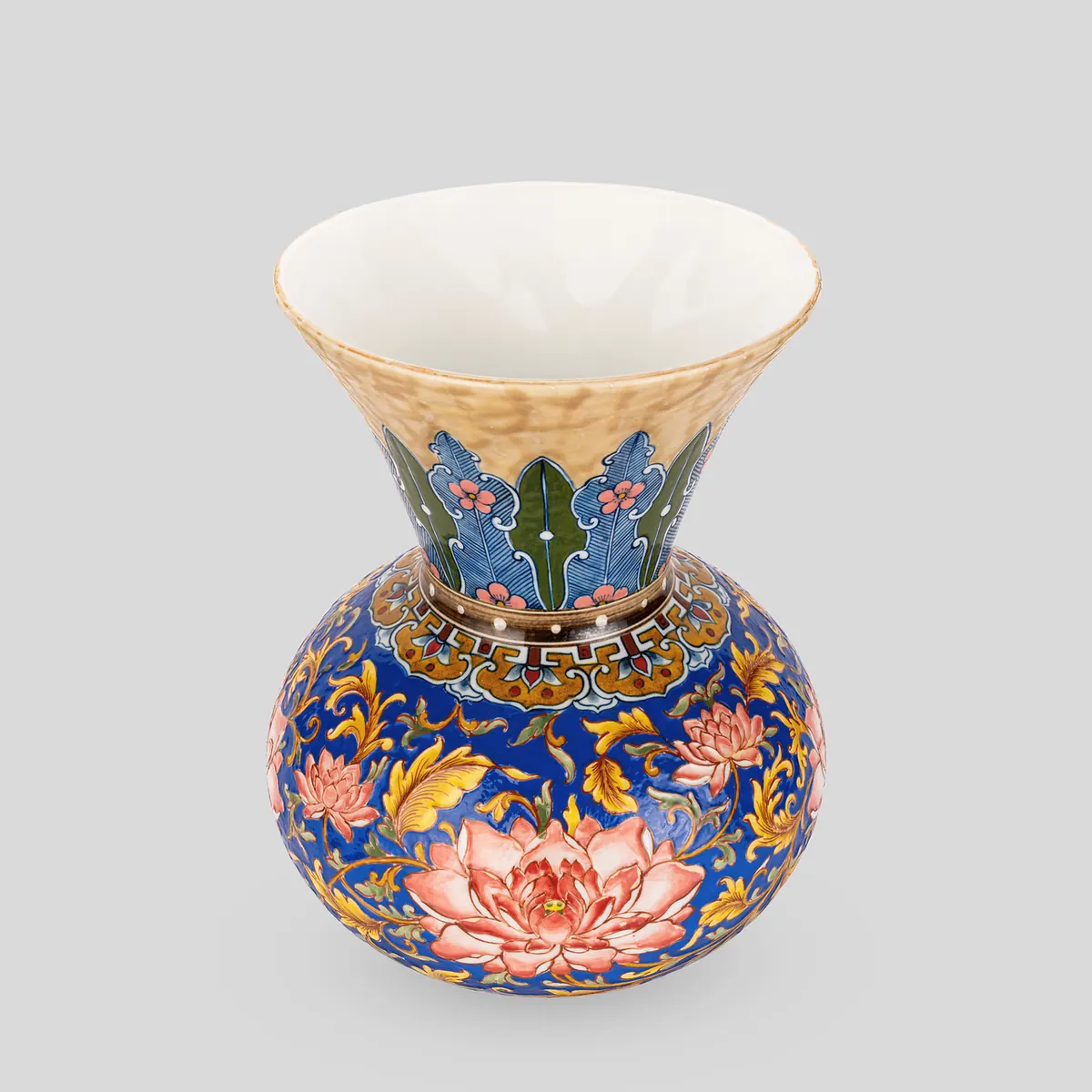
Stand in front of a pottery supplier's shelves and the labels start to blur: terracotta, buff stoneware, grogged, translucent porcelain. All of it is clay, dug or blended, and yet a mug made from one body behaves nothing like a mug made from another. Three words do most of the sorting out — earthenware, stoneware and porcelain. What separates them is mainly heat: how hot a clay can be fired, and what that heat does to its structure once it gets there.
The Short Answer: Heat, Density, Porosity
Clay is largely alumina, silica and water, plus iron and other minerals that vary with the source. The differences between the three families come down to what happens as the kiln climbs.
Somewhere above about 1000°C, clay begins to vitrify. Particles fuse, open pores close, and the body becomes denser, harder and less absorbent. Fire it hotter still and the process goes further — until the clay softens and slumps. Every body has a window: too cold and it stays weak and porous, too hot and it turns into a puddle on your kiln shelf.
Earthenware sits at the low end of that window, stoneware in the middle, porcelain at the top. That single fact explains most of the rest — how much a pot shrinks, whether it holds water, how the glaze sits on it, and how it copes with a dishwasher or a frosty night on the patio.
Temperature Is Only Part of the Story
The temperature ranges overlap, and the numbers are not universal. A low-fire stoneware may mature at 1180°C, while a true porcelain might need 1300°C or more. What matters is the clay's maturity point: the narrow band where it has vitrified enough to be strong and watertight but not so much that it deforms. Fluxes such as feldspar, nepheline syenite and iron lower the temperature at which this happens. Grog — pre-fired clay added to a body — raises thermal shock resistance and opens the texture, but it also makes the clay less plastic. Two bags labelled stoneware can therefore feel and fire very differently.
Earthenware: Low, Warm and Forgiving
Earthenware is fired somewhere around 1000–1150°C and never reaches full vitrification, so it stays porous. That's why an unglazed terracotta plant pot pulls moisture out of the compost, and why a garden pot left out through a hard frost can flake and spall as water inside the wall freezes and expands.
Its virtues are price and friendliness. Earthenware is plastic, easy to throw, happy to be rolled into slabs or pinched, and it takes texture beautifully. It also shrinks less than the high-fire bodies, so large forms and hand-built pieces are less likely to crack on the way up, and firing is shorter and cheaper. Red terracotta is the classic look, but buff and white earthenwares are widely available, and low-temperature glazes give you a bright, generous palette — majolica, tin-glazed ware and delftware all belong here.
Good uses include indoor planters, decorative tiles, sculpture, raku and smoke-fired pieces, and anything where you want to learn fast without spending much. One caution: treat unglazed earthenware as decorative. It isn't the right choice for a mug that gets boiling water poured into it, because the body's reaction to sudden heat can craze the glaze or crack the pot. Keep vintage or unknown glazes off food surfaces; you can't know what's in them.
Common Earthenware Wares
- Terracotta garden pots: porous, frost-sensitive, and best emptied or moved under cover in winter.
- Majolica plates: bright tin-glazed earthenware, often decorative or lightly used.
- Raku bowls: dramatic crackle and smoke, but porous and not for food or water.
- Low-fire sculpture: forgiving for large or complex forms that would be risky in porcelain.
Stoneware: The Everyday Workhorse
Stoneware fires roughly between 1200°C and 1300°C, and at that range it vitrifies. The pores close, the body turns dense and tough, and a well-fired stoneware pot is watertight even before glazing — though most potters glaze it anyway, for colour, for a smoother surface and for hygiene.
The word covers a broad group. Some bodies are cool grey, some toasty buff, some deliberately speckled with iron that blooms through the glaze. What they share is durability.
Hence its use for domestic ware. Mugs, bowls, dinner plates, casseroles, teapots — if it gets used daily and goes in the dishwasher, stoneware is almost certainly what it is. It survives knocks that would chip earthenware, and it handles thermal change far better, which is why so much ovenware is stoneware. Even so, sudden extremes can still crack a pot, so check the maker's guidance before moving a cold dish into a hot oven, and never take a hot casserole straight to a cold stone counter.
Stoneware Strengths and Limits
- Durable: resists chipping and daily wear better than earthenware.
- Watertight: a fully mature body is non-porous even before glazing.
- Thermal-shock tolerant: better than earthenware, but not immune to drastic changes.
- Versatile: takes both reduction and oxidation glazes, from rustic to refined.
- Heavier: dense bodies feel substantial, which some diners love and some shipping budgets do not.
Porcelain: High, Fine and Translucent
Porcelain is the high-fire aristocrat. Traditional porcelain is made from kaolin, feldspar and silica, with very little iron. It is fired from about 1280°C to 1400°C, depending on the body, until it vitrifies almost completely. The result is white, hard, non-porous and — in thin sections — translucent. Hold a good porcelain teacup up to a window and the light glows through the wall. Tap it and it rings.
That beauty comes with difficulty. Porcelain is less plastic than earthenware or many stonewares, so it can be stubborn on the wheel and prone to cracking during drying. It shrinks more, often around 12–15 per cent, and it slumps easily if over-fired. Potters often fire it on a bed of sand or in a saggar to support the form, and they must match glaze to body carefully: a glaze that fits earthenware may craze or shiver on porcelain. Bone china, the English cousin, adds bone ash to the recipe and fires lower, giving a warmer white and great strength in thin walls. True porcelain is also used for electrical insulators and dental crowns, which tells you how hard and non-porous it is.
Porcelain is the choice for fine tableware, teapots, delicate sculpture, jewellery and anything that needs to look crisp, white and luminous. It is also the most expensive and the least forgiving. Beginners usually do better to learn on earthenware or a mid-range stoneware, then move to porcelain once they can control drying, throwing and firing consistently.
How to Tell Them Apart in the Cupboard
Without firing records, you can still make a decent guess. Look at the bottom of the pot, the weight, the colour and the way it behaves with light. Here is a quick comparison:
- Earthenware: often warm red, orange or cream; feels lighter and more porous; may have a thick, glossy glaze; chips reveal a chalky or open body.
- Stoneware: usually grey, buff, tan or speckled; feels dense and solid; chips show a tight, stone-like body; often slightly magnetic if iron-rich.
- Porcelain: white or near-white, sometimes faintly blue-grey; thin walls feel strong for their weight; backlit rims glow; rings clearly when tapped.
These clues are not foolproof. A white stoneware can look like porcelain, and a dark porcelain can look like stoneware. The most reliable test is a water absorption test on a broken shard: weigh it dry, boil it in water, cool it, blot the surface and weigh again. Earthenware will gain noticeable water; stoneware and porcelain should gain very little. That difference is why a cheap earthenware mug can weep through its glaze over time, while a well-fired stoneware or porcelain one stays tight.
Which Clay for Which Job?
A simple rule: choose the body that matches the life the pot will live.
- Daily mugs and dinnerware: stoneware or porcelain. Both are durable and watertight; stoneware is more forgiving, porcelain is finer.
- Oven and dishwasher: vitrified stoneware or porcelain made for the purpose. Check the maker's instructions, and avoid sudden temperature changes.
- Indoor planters and decorative tiles: earthenware. It is cheap, expressive and easy to work.
- Outdoor planters: frost-resistant stoneware, or empty earthenware pots before winter. Unglazed terracotta in a freezing climate will eventually suffer.
- Fine, translucent tableware: porcelain. Expect to pay for the material, the fuel and the failure rate.
Choose the clay for the job, then let the glaze follow. A beautiful glaze on the wrong body is still the wrong pot.
The three families are not ranks of quality so much as tools with different tempers. Earthenware is warm, forgiving and inexpensive. Stoneware is the reliable middle: tough, practical and at home on the everyday table. Porcelain is the high-fire specialist, white, dense and translucent, demanding skill but offering a refinement the others cannot match. Learn what each one can take — and what it cannot — and the labels on the supplier's shelves stop blurring. They become choices.
Photo: Gốm_Sứ_Cương_Duyên / Pixabay
Related posts
More stories you’ll love reading